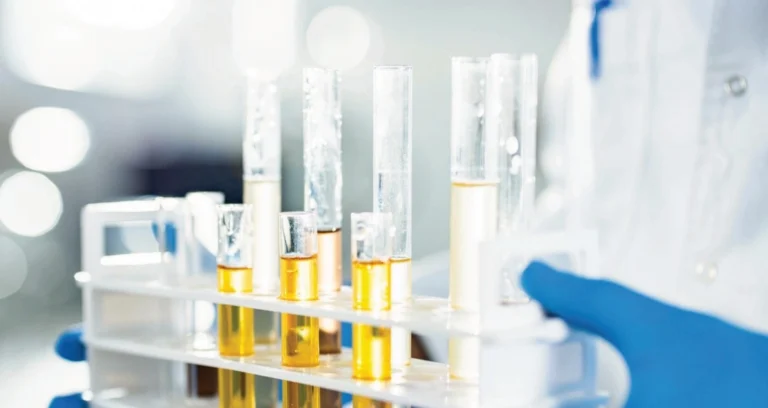
Talking about oil analysis in agricultural equipment means talking about availability, predictability, and asset protection.
Modern agribusiness operates with increasingly sophisticated machinery, with high replacement costs and a decisive role in short operational windows. During planting, spraying, and harvesting periods, an unexpected failure can mean more than just a repair: it can represent delays, loss of productivity, and a direct increase in operational costs.
More than just indicating whether the oil can still be used, the analysis reveals what is happening inside the equipment.
It helps identify wear and tear on agricultural components, the presence of contaminants, and chemical changes that often don’t appear in visual inspections or operational alarms.
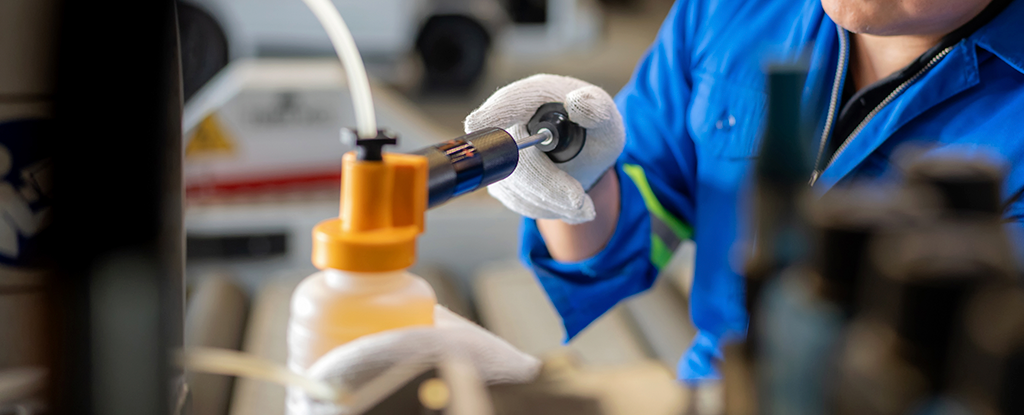
Why is oil analysis becoming increasingly relevant for agriculture?
Agriculture has fully embraced the logic of connectivity. Today, many operations already coexist with telemetry, onboard sensors, and digital monitoring platforms.
This has brought important gains in operational visibility, but it does not eliminate the need to understand the internal condition of lubricated systems.
Sensors can display temperature, pressure, rotation, or equipment behavior.
Oil analysis reveals contamination by water, fuel, or dust, lubricant degradation, and metallic particles related to component wear. In other words, one layer of data does not replace the other. They complement each other.
And this combination is one of the foundations of predictive maintenance in agriculture.
Furthermore, the agricultural environment is naturally harsh. Dust, temperature variations, humidity, long working hours, and seasonality increase the importance of monitoring the actual condition of the equipment. When the asset is critical to the harvest, any gain in predictability helps reduce risk and improve fleet utilization.

5 reasons to adopt oil analysis in agricultural equipment
Now, let’s better understand the main reasons for adopting oil analysis in agricultural equipment.
-
Reduction of maintenance costs by up to25%
Oil analysis reduces costs because it allows intervention based on the actual condition of the asset. This avoids both late corrective maintenance and excessive preventive maintenance.
When a company only acts after a failure, it usually pays more. The cost includes parts, labor, downtime, emergency dispatch, and impact on operations.
When it operates solely based on a schedule, it may unnecessarily anticipate replacements and increase the total maintenance cost without a proportional gain in reliability.
Oil analysis improves this balance because it supports a more technical decision on when to monitor, inspect, correct, or replace.
McKinsey reports that analytical maintenance strategies can reduce maintenance costs by approximately 18% to 25%, depending on the maturity level of the operation.
In agriculture, this type of logic makes even more sense because tractors, harvesters, and hydraulic systems combine high value and high operational impact.
When we talk about predictive maintenance in agriculture, the benefit lies not only in spending less, but in spending better.
-
Sheanticipates failures before the shutdown
This is one of the biggest advantages of oil analysis in agricultural equipment. The oil circulates through the system and carries signals of what is happening internally.
When the sample is analysed, it can indicate abnormal wear, contamination, and lubricant degradation at an early stage. This allows for the identification of potential failures before they break down.
It is precisely this type of gain that makes oil analysis in tractors and harvesters so valuable. Instead of discovering the problem at the moment of functional failure, the team can act within the window in which the defect already exists but can still be controlled.
Among the signs observed are metals associated with component wear, viscosity changes, oxidation, and the presence of contaminants.
Silicon, for example, can indicate dust ingress and poor sealing or filtration. Excess water, fuel, and glycol are particularly critical contaminants because they compromise lubricant protection and accelerate wear.
This type of reading is a significant advantage for operations seeking to monitor agricultural equipment with greater technical depth.
-
It helps to increase the lifespan of assets
Agricultural equipment represents a significant investment. Therefore, any strategy that helps preserve engines, transmissions, differentials, and hydraulic systems has a direct impact on the business.
Oil analysis contributes to this because it helps to precisely control the factors that shorten the lifespan of a system: contamination, lubricant degradation, and progressive wear of components.
When operations identify these anomalies early, they prevent a small problem from turning into severe damage.
It’s also worth remembering that analysis gains strength when there is historical data. A single sample already provides useful information. But the true value emerges when the company tracks trends by equipment.
This improves interpretation, shows deviations more clearly, and helps to understand whether the wear is stable, accelerating, or indicating a recurring failure.
As a general guideline for economic lifespan, Iowa State University uses a rule of thumb of 10 to 12 years for most agricultural machinery and about 15 years for tractors.
Preserving the condition and preventing accelerated wear and tear helps to better protect this investment cycle.
-
It reduces the risk of unscheduled shutdowns during critical periods
In agriculture, the problem of a failure is not just technical. It’s operational. A breakdown at the wrong time can compromise a harvest window and generate a much greater impact than the cost of repair.
The agricultural cost literature from Iowa State University highlights the value of losses due to operational delays in machinery cost calculations, showing that the timing of operations makes a real economic difference. This directly relates to the global agricultural scenario, where the unavailability of equipment can affect planting, application, and harvesting.
This is where oil analysis for harvesters, tractors, and other critical assets becomes crucial. By anticipating wear and contamination, it allows for planned intervention before a breakdown occurs. A planned action has a cost, of course, but it almost always costs less than an unexpected failure at a critical moment.
In practice, the analysis transforms emergency maintenance into planned maintenance, and this difference is one of the most valuable for agriculture.
-
It strengthens sustainability, traceability, and compliance
Oil analysis also supports a more sustainable routine that better adheres to environmental requirements.
The disposal of used or contaminated lubricating oil is governed by strict local and international environmental regulations. Competent environmental agencies prohibit the disposal of used oil in soil, water, and sewage systems. International standards (such as European environmental directives and ISO 14001 guidelines) establish that collected oil must be destined for recycling or appropriate re-refining processes, ensuring compliance and minimizing ecological impact.
Oil analysis is beneficial because it helps prevent premature oil changes and broadens the technical basis for maintenance decisions. This doesn’t mean “extending use at any cost,” but rather changing oils more carefully.
Furthermore, it strengthens traceability, technical history, and maintenance documentation, which are relevant points for operational governance, internal audits, and ESG practices.
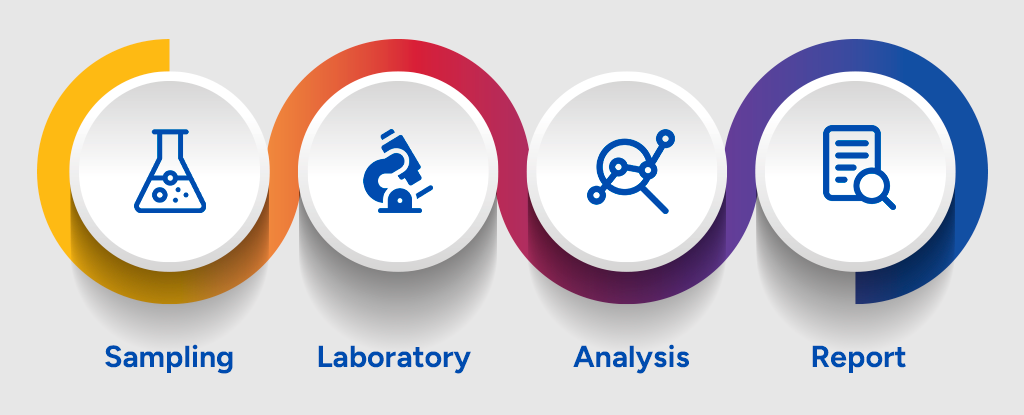
How does oil analysis work in agricultural equipment?
The process begins with the correct collection of the sample. This step is crucial because improper collection can contaminate the result.
Ideally, follow a standardized procedure, use an appropriate container, and collect the sample under representative operating conditions, avoiding external interference.
Laboratory analysis
Next, the sample is sent to a specialized laboratory. Among the most common tests are viscosity analysis, contaminant analysis, wear metal spectrometry, and lubricant degradation indicators.
The goal is to understand both the condition of the oil and signs of internal wear in the equipment.
Technical interpretation and action
The value of the analysis lies not only in the raw result. It lies in the technical interpretation. The equipment’s history, the severity of the application, the type of system, and the trend of the indicators help define whether the condition is normal, requires attention, or is critical.
From there, the operation decides whether to continue monitoring, schedule an inspection, or intervene immediately. This is what transforms the analysis into a real tool for predictive agricultural maintenance.
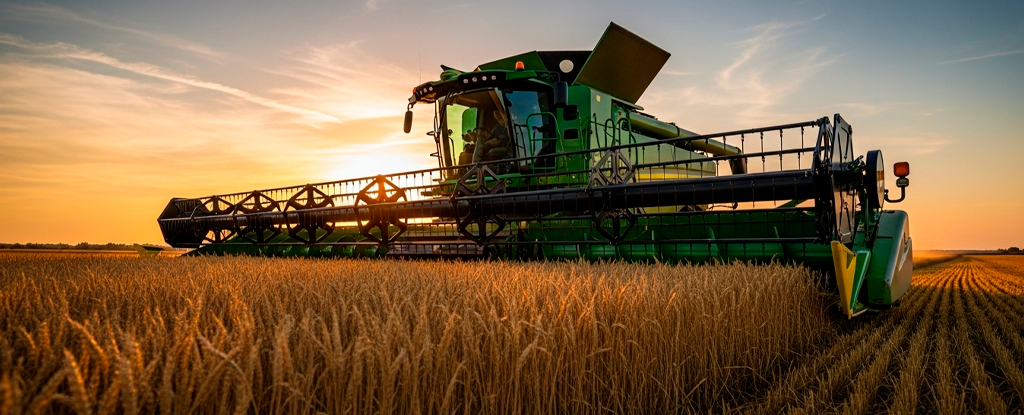
What changes are currently happening in agriculture with technology and innovation?
The big change is not the disappearance of oil analysis, but its integration into smarter maintenance management.
Digital platforms, sensors, connectivity, and analytics enhance the ability to consolidate historical data, identify trends, and prioritize actions.
But the central point remains:
- Sensors show operational behavior
- Oil analysis shows internal condition
When these two layers complement each other, decision-making improves.
It is precisely in this context that solutions like ALS’s S360, become relevant. The platform helps to centralize data, track sample history, visualize trends, and support the technical interpretation of results with greater clarity.
In practice, this facilitates continuous asset monitoring and allows the team to connect analysis, operational context, and decision-making in a single workflow.
For agriculture, this makes a difference because tractors, harvesters, and other critical equipment operate in harsh environments and within short time windows.
The more organized the data analysis, the greater the operation’s ability to anticipate risks, plan interventions, and reduce reliance on reactive decisions.
This is the most solid path for those who want to evolve in agricultural equipment monitoring without relying solely on corrective maintenance or a fixed schedule.
Oil analysis in agricultural equipment is extremely relevant because it addresses challenges that remain central to agriculture: reducing costs, preventing failures, preserving assets, and maintaining operational availability at the most crucial times.
More than just a technical routine, it has become a management tool for operations that seek greater predictability and efficiency.
Want to understand how to structure a more efficient oil analysis routine for tractors, harvesters, and other agricultural assets? Talk to the ALS team and discover how to transform lubrication data into more assertive maintenance decisions.
Before you go, here are the answers to the main questions about oil analysis in agricultural equipment.
What is the ideal frequency of analysis?
According to the manufacturer’s manual. At ALS, we recommend that collection be carried out at half the time stipulated by the manufacturer, in order to allow for interventions during scheduled maintenance, if necessary.
How much does an oil analysis cost?
The investment varies depending on the type of analysis and the laboratory. Contact ALS for specific information about your assets. And remember: the ROI is high! A single avoided error can pay for hundreds of analyses.
Oil analysis replaces preventive maintenance?
No. It complements calendar-based preventive maintenance, optimizing interventions on internal components while maintaining the routine for changing filters, belts, and other items subject to natural wear and tear.