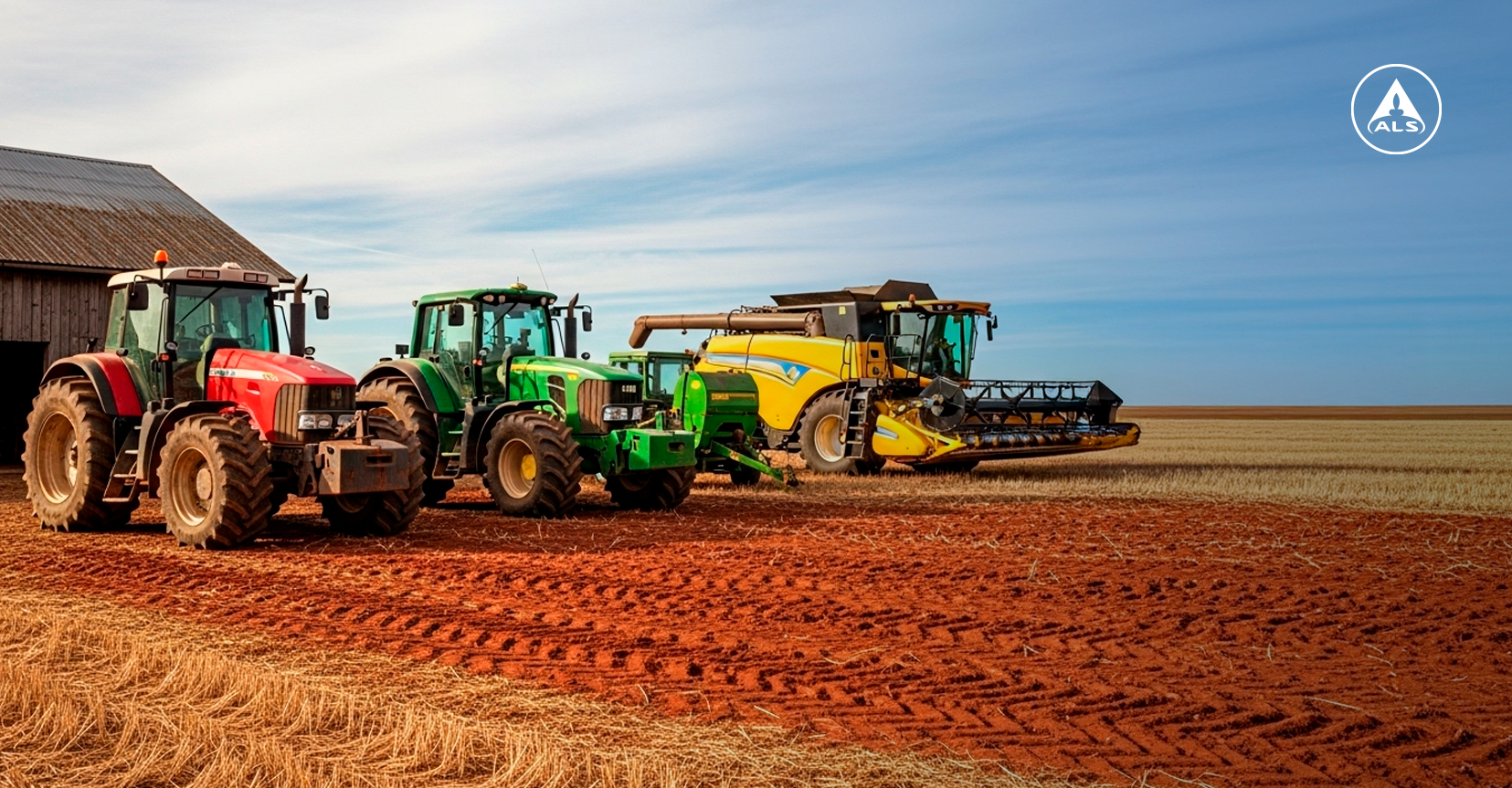
The harvest is over. Your machines have worked intensely for months, facing long hours, adverse conditions, and extreme operational demands. Now it’s time to stop… or to prepare?
The off-season represents a strategic window of opportunity. While the equipment is idle, it’s the ideal time to ensure it will be 100% reliable when the next harvest begins.
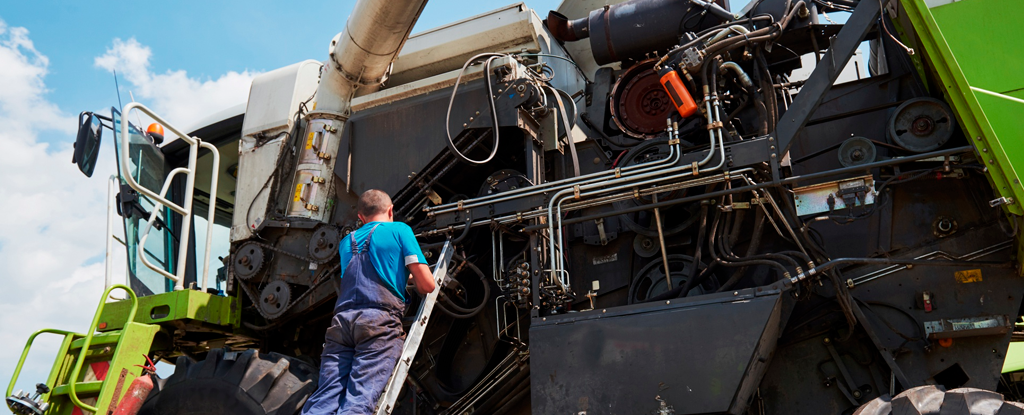
What is the off-season?
The off-season is the period between the end of one harvest and the beginning of another, when planting and harvesting activities are interrupted.
Globally, this interval varies significantly depending on the region, climate, and crop being cultivated:
- Northern Hemisphere (USA, Canada, Europe): the typical off-season occurs between October and March, when the autumn harvest ends and before spring planting.
- Southern Hemisphere (New Zealand, South Africa): the off-season generally occurs between April and August.
Main Season: the main growing season, when crops such as wheat, corn, soybeans, and canola are planted, depending on the region.
Second Crop: the second crop of the year, grown after the main crop when weather conditions permit. Common in regions with extended growing seasons.
Off-Season: a period of pause in productive activities, traditionally used for soil rest, planning for the next crop, and strategically, for equipment maintenance.
The off-season can last from 60 to 120 days, depending on the region and the crop calendar adopted. This period, although representing a pause in field operations, should be seen as a time of high activity for maintenance teams.
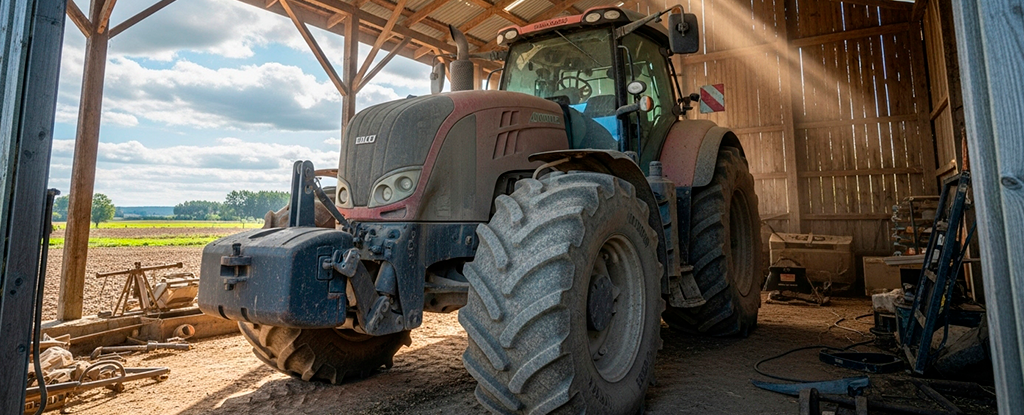
Off-season challenges for agricultural equipment
Many managers make the mistake of believing that idle machines do not wear out. The reality is quite different.
During the off-season, agricultural equipment faces a series of silent challenges that can compromise its availability and performance in the next harvest.
Idleness and deterioration
Even when not in operation, the internal components of equipment remain subject to degradation processes. Fluids at rest can accumulate contaminants, seals can dry out and lose effectiveness, and batteries can completely discharge.
The lack of oil circulation, for example, allows wear particles to accumulate in critical areas of the engine and transmission.
Contamination by moisture and dust
The temperature variation between day and night during the off-season creates a condensation effect inside reservoirs and crankcases. This moisture contaminates the lubricants, reducing their protective properties and accelerating corrosive processes.
In addition, machines stored without adequate protection are exposed to the accumulation of dust and impurities that can penetrate critical systems.
Corrosion and oxidation
The presence of moisture, combined with acidic residues in used lubricants, creates ideal conditions for internal corrosion of metal components.
Bearing surfaces, gears, and hydraulic cylinders are especially vulnerable when exposed to degraded fluids for extended periods without movement.
Costs of emergency shutdowns
A combine harvester that stops mid-season can cost between USD 5,000 and USD 15,000¹ per day in lost opportunity, not counting emergency repair costs, which are typically 3 to 5 times higher than planned maintenance.
The unavailability of critical parts can extend this period for weeks, resulting in losses that easily exceed USD 100,000 in medium-sized operations.
Loss of planting window
In agribusiness, timing is everything. Missing the ideal planting or harvesting window due to equipment failures can significantly reduce crop productivity.
According to experts in the field, failures in adjustment and maintenance that affect the depth and spacing of seeds can irreversibly reduce the yield potential on the very first day.

Off-season maintenance: why is it essential?
The off-season represents much more than a period of rest. It’s a strategic window to ensure your agricultural assets are ready to perform at their highest level when operational demand returns.
Window of opportunity without operational pressure
During the harvest season, every hour counts. Downtime for maintenance means lost production and threatened deadlines. In the off-season, you have the luxury of time.
It’s possible to perform in-depth diagnostics, wait for replacement parts without anxiety, execute complex repairs, and validate the results of interventions without the pressure of unavailable equipment affecting operations.
Budgetary planning and predictable costs
When you plan interventions during the off-season, you can negotiate better prices with suppliers, buy parts in advance, spread costs over several months, and avoid the typical price increases of emergencies.
This planning transforms the maintenance of a surprise cost into a predictable and controllable investment.
Guaranteed availability for the next harvest
Imagine started planting or harvesting with the certainty that each machine has been thoroughly inspected, tested, and approved. This level of operational confidence is only possible with a structured off-season maintenance program.
You eliminate the risk of discovering critical problems precisely when you need the equipment most.
Significant increase in service life
Agricultural machinery represents a significant investment. Each additional year of service life gained through proper maintenance represents direct savings and a better return on investment.
Well-maintained tractors and harvesters can operate efficiently for 15 to 20 years, while neglected equipment often needs replacement after 8 to 10 years².

Predictive maintenance in the off-season: the role of oil analysis
Oil analysis is the most powerful and cost-effective tool for assessing the internal health of agricultural equipment without disassembling it.
Predictive maintenance costs, on average, 40% less than corrective maintenance³.
During the off-season, it becomes even more strategic, allowing for informed decisions about which equipment needs intervention and what the level of urgency is.
Why analyse oil in the off-season?
Lubricating oil is like the lifeblood of a machine. It circulates through all the critical components, collecting valuable information about the condition of each one.
A single sample can reveal:
Accurate diagnosis of the condition of the components
By quantifying the wear metals present in the oil, it is possible to identify exactly which components are wearing out and at what rate.
Excess iron may indicate cylinder wear, copper may point to problems in bushings and bearings, and aluminium may reveal piston wear.
Contamination identification
The analysis detects the presence of water, fuel, glycol from the cooling system, and solid particles. Each contaminant points to a specific problem that can be corrected before causing greater damage.
Forecast of failures before the next harvest
Based on historical trends and benchmark values, oil analysis allows us to predict when a component will reach its wear limit.
This makes it possible to schedule replacements at the ideal time, avoiding both unexpected failures and premature replacements.
Planning interventions with sufficient time
The analysis results are ready quickly, allowing you time during the off-season to interpret the data, consult experts, estimate parts costs, and schedule repairs without rushing or incurring additional expenses.
What oil analysis reveals
Wear and tear of components such as, for example:
- Iron (Fe): cylinders, pistons, gears, shafts
- Copper (Cu): bushings, bearings, bushings
- Aluminium (Al): pistons, blocks, housings
- Chromium (Cr): piston rings, linings
- Lead (Pb): bushings, bearing alloys
The progressive increase in these metals indicates active wear. Sudden spikes may reveal early-stage failures.
Contamination:
- Water: condensation, radiator leak, external infiltration
- Fuel: injector failure, worn piston rings
- Glycol: leak in the cooling system
- Dust/Silicon: air filter failure, compromised seals
Lubricant Degradation:
- Viscosity: loss of protective capacity
- TBN (Total Base Number): depleted alkaline reserve
- Oxidation: aging of the oil
- Nitration: severe thermal degradation
Effectiveness of oil changes performed:
Post-change analysis confirms whether the new oil meets specifications and whether the system cleaning was effective. Residues of old oil or persistent contaminants may indicate the need for system flushing.
Turn the offseason into a competitive advantage
The off-season is not wasted time. It’s a strategic window to ensure your equipment performs at its highest level when you need it most.
While some managers see this period merely as a pause in operations, visionary managers view it as an opportunity to create a sustainable competitive advantage.
Oil analysis emerges as a central tool in this strategy. For a fraction of the cost of emergency repairs, you gain complete visibility into the internal health of each piece of equipment, identify problems at an early stage, and plan interventions at the ideal time.
It’s not an expense; it’s an investment with a proven ROI.
The data is clear:
Companies that implement structured off season preventive maintenance programs, anchored in systematic oil analysis, reduce unscheduled downtime by more than 50%, save 35% on total maintenance costs, and extend the lifespan of their assets by up to 25%.*
The next harvest is already on the horizon. The question isn’t whether you’ll perform maintenance, but whether you’ll do it reactively and expensively during the harvest, or proactively and economically during the off-season. The choice is yours. The tools are available. The time is now.
Talk to one of our experts.
Notice:
¹Estimated values based on agricultural and industrial downtime cost studies, considering operational loss, logistics, labor, and impact on the production window. Costs vary according to the type of equipment, crop, region, and scale of operation.
²The useful life of agricultural equipment varies according to operating conditions, load regime, environment, maintenance practices, and manufacturer recommendations. The intervals presented reflect scenarios observed in the field and technical literature on asset management.
³Percentage based on international benchmarks for industrial and agricultural maintenance, which indicate cost reductions between 25% and 45% when structured predictive maintenance programs are implemented.
*Typical results observed in reliability and predictive maintenance studies in industrial and agricultural environments. Actual gains depend on the maturity level of the maintenance program, data quality, operational discipline, and adherence to technical recommendations.