Wear Particles
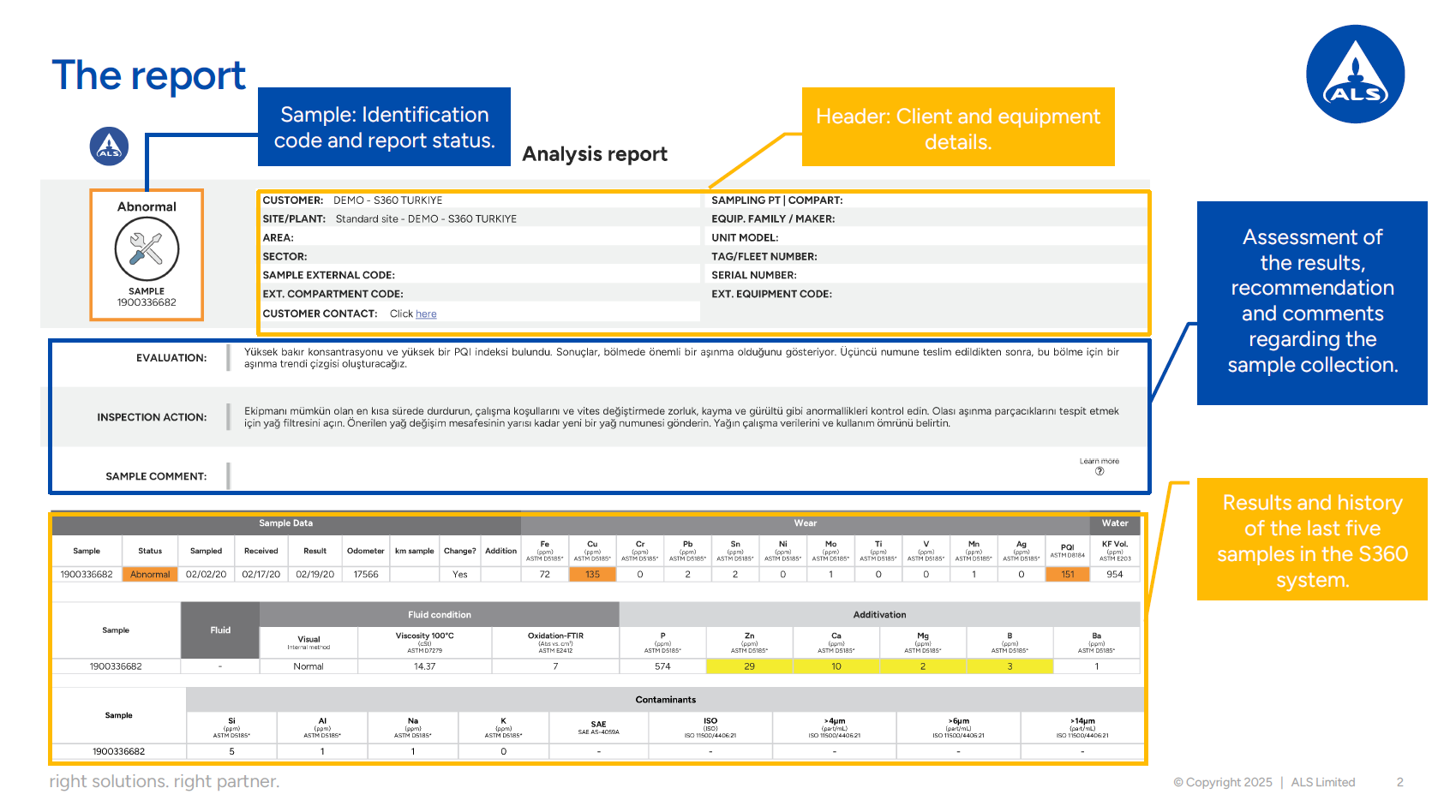
When interpreting a sample, we cannot assess an individual element in isolation; we must consider the combination of results, wear trend analysis, oil condition, whether any top-up occurred during the period, the equipment’s operating time, among other actors, as well as an understanding of the behaviour of similar systems.
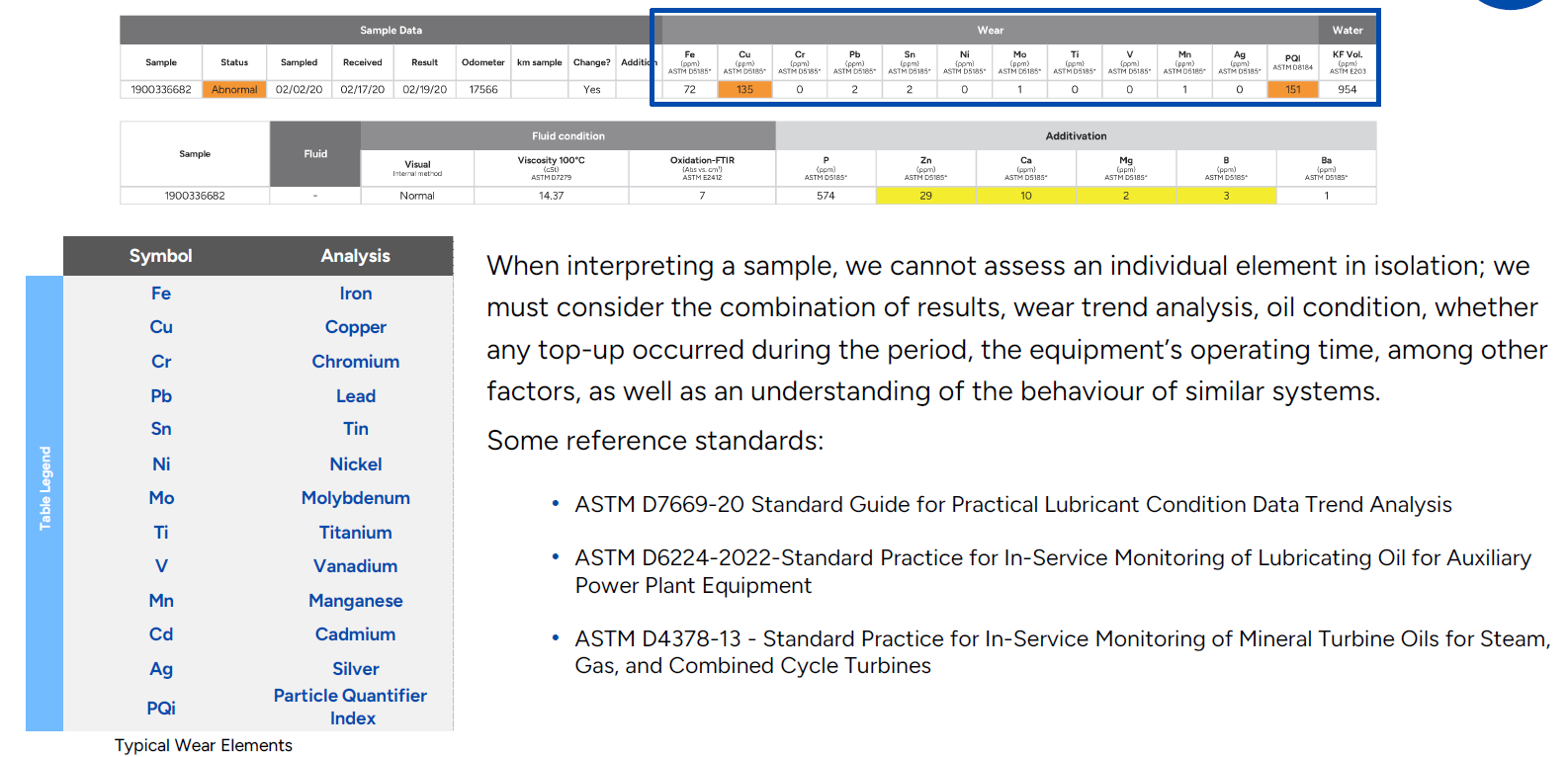
Some reference standards:
• ASTM D7669-20 Standard Guide for Practical Lubricant Condition Data Trend Analysis
• ASTM D6224-2022-Standard Practice for In-Service Monitoring of Lubricating Oil for Auxiliary
Power Plant Equipment
• ASTM D4378-13 – Standard Practice for In-Service Monitoring of Mineral Turbine Oils for Steam,
Gas, and Combined Cycle Turbines
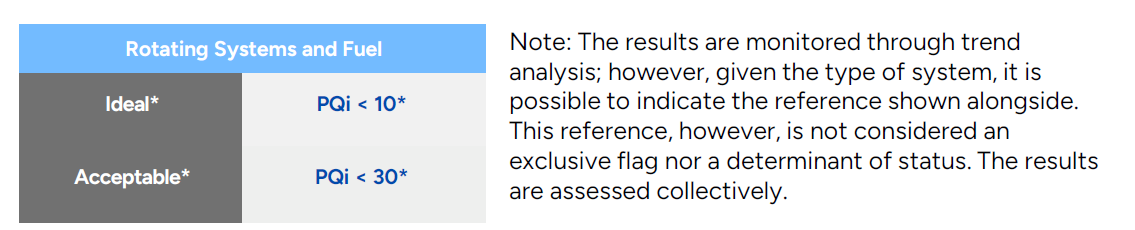
In the case of diesel, where wear control is carried out via PQi, it is important to emphasise that the observed wear may originate from storage and transport processes. Contamination can promote corrosion in the systems used, and such system wear can be detrimental to fuel efficiency.
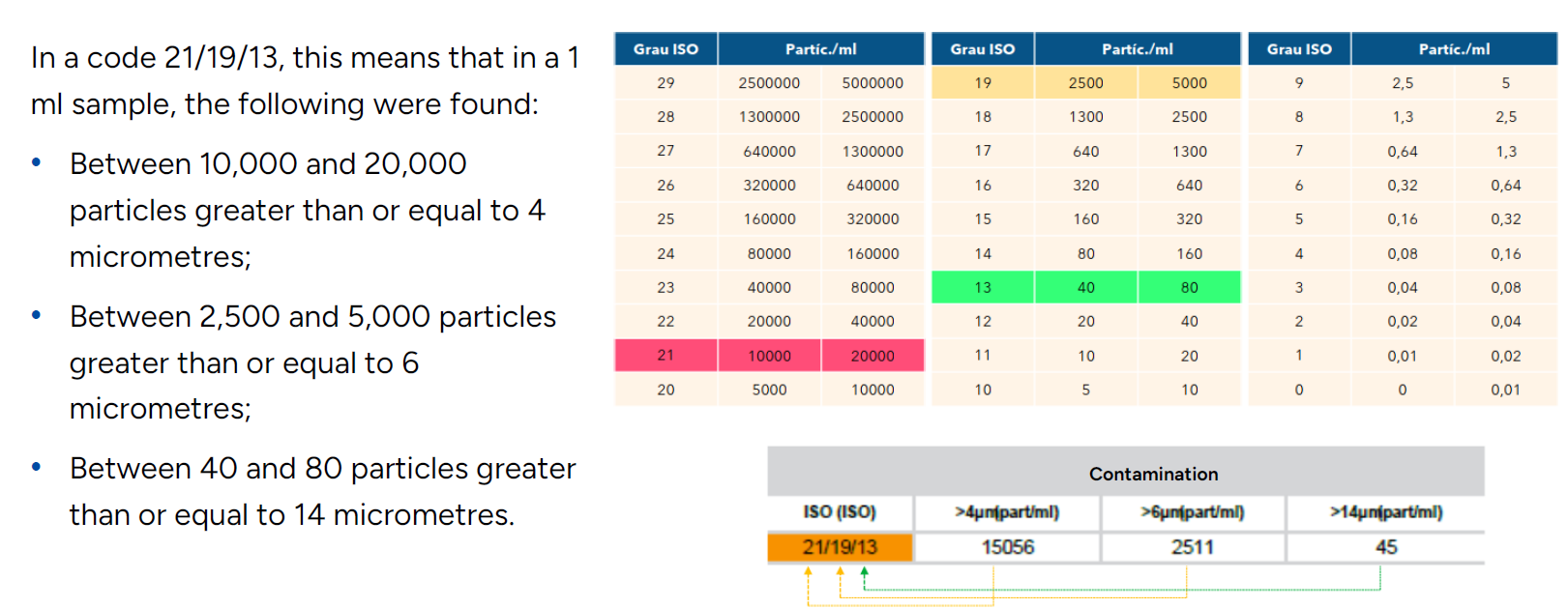
Particle Count by ISO 4406 Class
For the classification of concentrations and measurement of results, we use ISO 4406 as the reference standard.
The standard defines only the classification method: the level codes are ordered (1st/2nd/3rd) and differentiate the size and distribution of particles according to their concentration (particles/ml) within the following size ranges:
> 4 μm
> 6 μm
> 14 μm
Specific application limits are provided by equipment manufacturers in accordance with each design. When these values are unavailable, industry best practice for the respective system is used. See an example on the next page.

Note: Specific application limits are provided by the equipment manufacturers according to each design. When these values are unavailable, industry best practice for the respective system is used.
Particle Contamination(ISO 4406 Class or SAE AS 4059)
Main issues that may occur due to high particle counts:
• Increased wear;
• System seizure;
• Oil degradation.
Contamination from external factors

Note: Although these values serve as a reference, we take into account the overall behaviour of the set of results. For equipment/compartments during running-in periods and/or when analysis results appear in isolation, these values may vary. Sudden changes, higher wear rates and accelerated fluid degradation will trigger an abnormality flag in related results (even if individual values are within or outside the reference ranges).
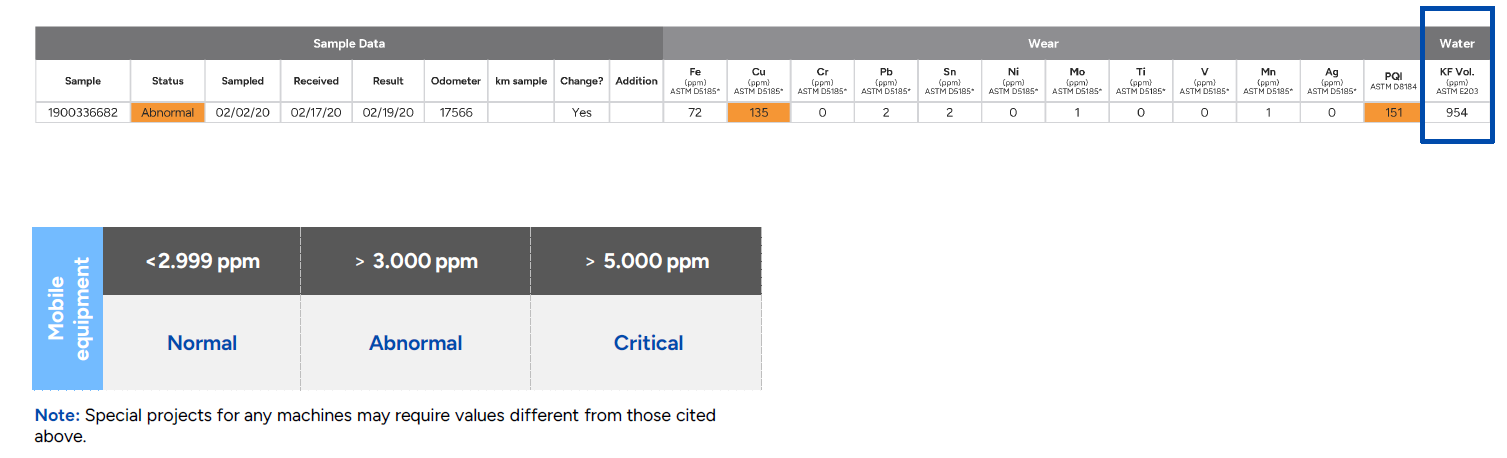
Water Contamination
Main problems that may occur due to water contamination:
In the machine:
•Compromises additive performance
•Accelerates oxidation
•Impairs lubrication (breaks the lubricating film)
In the sample:
• May interfere with readings from other tests
Visual
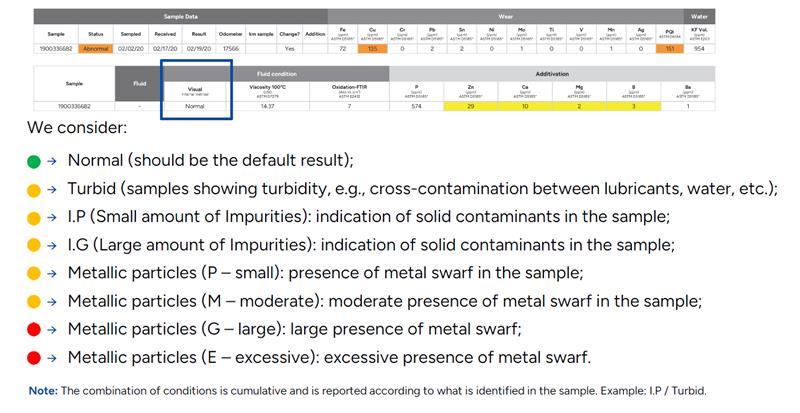
Note: The combination of conditions is cumulative and is reported according to what is identified in the sample. Example: I.P / Turbid.
Viscosity

Main problems that can occur due to viscosity:
• Poor lubrication, with system heating and greater friction between parts
• Promotes oil degradation and internal/external contamination
Oxidation(FTIR)
Oxidation represents the ageing of the lubricant. Interpretation parameters vary according to the type of lubricating oil and its manufacturer.
The trend of the latest results is also taken into account.

Main problems that can occur due to oxidation:
• Reduces lubrication properties, increasing viscosity and causing deposit formation and filter blockage.
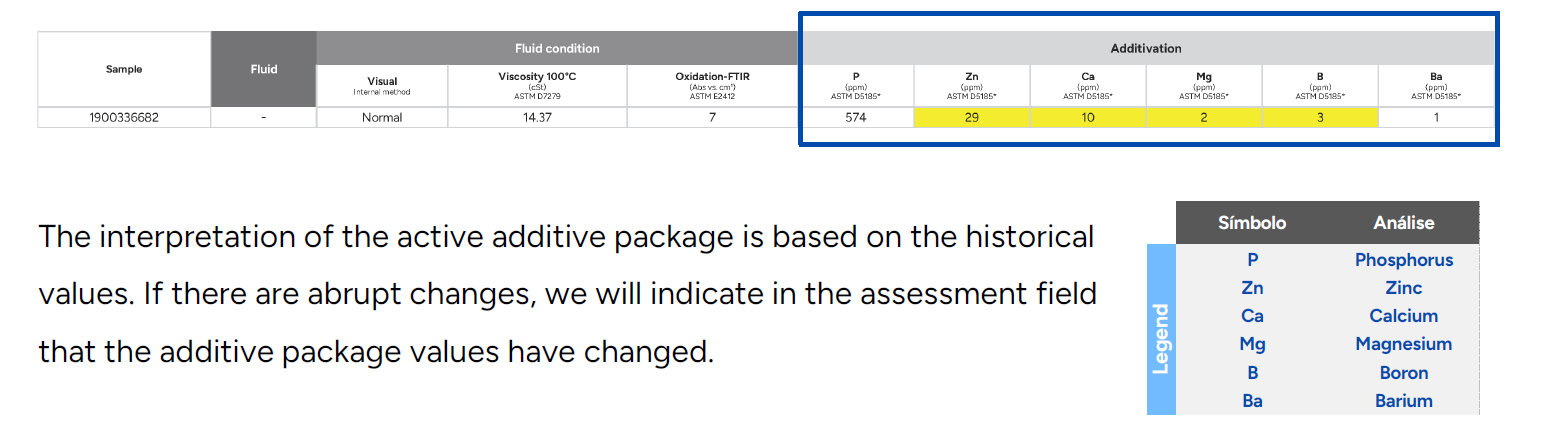
Additive package
Additives are modified or synthesised substances added to lubricants to modify, provide, or highlight the properties of base oils, in order to deliver greater effectiveness to the lubricants.
Sulphation(FTIR) and Nitration(FTIR)
Aims to identify the increase in gases generated by combustion (blow-by). The interpretation parameters vary according to the type of lubricating oil and its manufacturer. The trend of the most recent results is also taken into account.
Glycol(FTIR)
An indicator of contamination by coolant that contains ethylene glycol in its formulation. The interpretation parameters vary according to the type of lubricating oil and its manufacturer. The trend of the most recent results is also taken into account. Results indicating contamination should be assessed together.
Soot(FTIR)
An indicator of contaminants generated in combustion. The interpretation parameters vary according to the type of engine and its manufacturer. The
trend of the most recent results is also taken into account. An increase in soot may be related to the condition of the air filters.
TBN –Basicity
Measures the lubricant’s (its additives’) ability to protect the engine against gases generated in combustion, temperature variation and other factors, without losing lubrication properties over a period. It should be assessed according to trend analysis, considering different formulations.
Main situations that can reduce TBN earlier than expected:
• Increased crankcase blow-by.
• Overheating.
• Unplanned extension of the oil-change interval.
TAN –Acidity
Acids may originate from activation of organometallic additives, oil oxidation and acidic contaminants. The result should be evaluated using trend analysis, considering different formulations that may yield high initial values. Main problems that can occur due to increased TAN:
• Increased viscosity due to lubricant degradation.
• Corrosion on surfaces.
Want to learn more? Explore our other Mundo ALS content!